Address:
288 Gairidhara Marg,
Kathmandu, Nepal
Phone:
+977 1 4004976, 4004985
Committed to Development, Democracy,
Peace, and Human Rights
Rural Reconstruction Nepal (RRN) is a Nepali non-governmental, not-for-profit, social development organization, committed to driving positive change and empowerment in Nepal’s rural communities. It was initially set up in 1989 by a group of graduates from the Institute of Agriculture and Animal Science (IAAS), with its preceding name as ‘Grassroots Institute for Training and Services-Nepal’ (GRITS-Nepal). By subscribing to the basic principles of International Rural Reconstruction, GRITS-Nepal was renamed and officially registered as Rural Reconstruction Nepal (RRN) in 1993. Since then, RRN has grown to become one of the largest development NGOs in Nepal, executing various development programs and serving wide geographical areas and populations.
RRN has been granted Special Consultative Status with the Economic and Social Council (ECOSOC) of United Nations since 1997.
A world with JUSTICE, EQUALITY, PEACE and PROSPERITY for all citizens.
To improve the lives of the poorest rural people, particularly rural women, peasants, landless people and other disadvantaged and socially oppressed strata of Nepalese society by providing them opportunities for their socio-economic empowerment.
Go to the people,
Live among them
Learn from them,
Plan with them
Work with them,
Start with what they know
Build on what they have,
Teach by showing
Learn by doing, Not a
showcase but a pattern
Not odds and ends,
But a system
Not piecemeal, but an
integrated approach
Not to conform, but to
transform
Not relief, but release
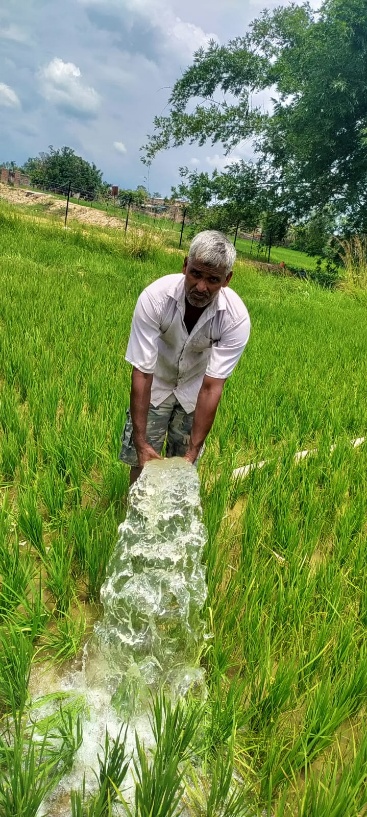
Agriculture provides employment opportunities to 66% of the total population and contributes about 36% of the GDP. Therefore, the development of the agriculture sector is key to the development of the national economy.
RRN has been engaged in the education sector for over 25 years. RRN’s education development approach is primarily concerned with raising awareness and social transformation in rural areas. This transformation includes vocational training for girls and out-of-s..
Majority of the rural population of Nepal do not have access to clean sanitized water, thus causing sanitization issues. RRN builds water stations around communal settlements which is free from contaminants. Wash programs that adopts Sustainable Service Initia..
For more than 25 years, RRN has continuously been engaged in the development and implementation of community managed rural infrastructures, such as paved paths, schools, health post, drinking water tanks. These infrastructures has benefited more than 2 million..
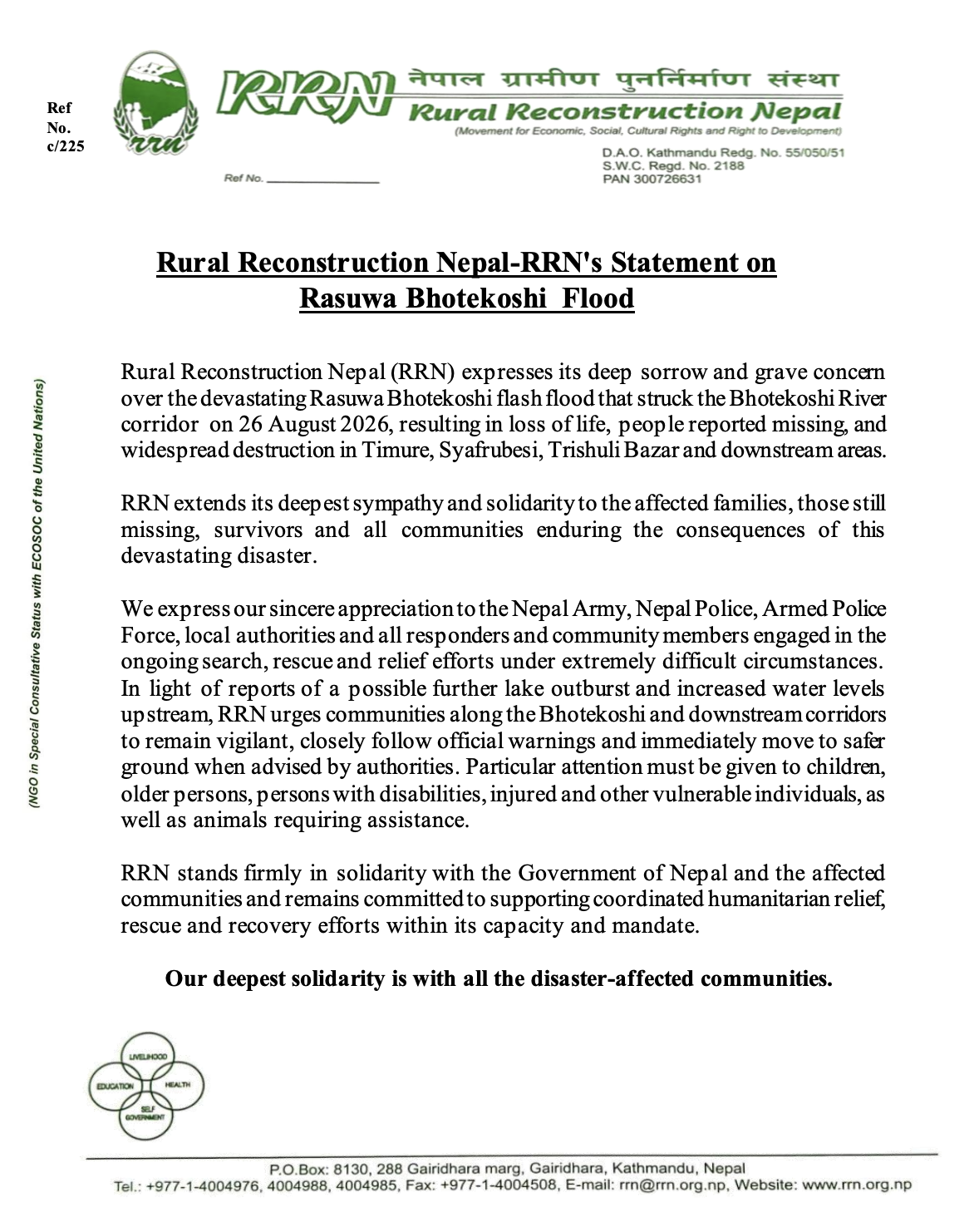
Flooding, by far is the most destructive force of nature that causes erosion of agricultural lands and human settlements.RRN is also a consortium member of DFID funded Nepal Emergency Relief Fund (NERF) since 2018 and also managing warehouse of emergency relie..
Nepal is a diverse, unequal and fragmented society, with 103 different social groups, distinguished by caste, ethnicity, religion and language.The Department for international development (DFID) supported ‘Community Development Programmeme (CDP) -Extension is..
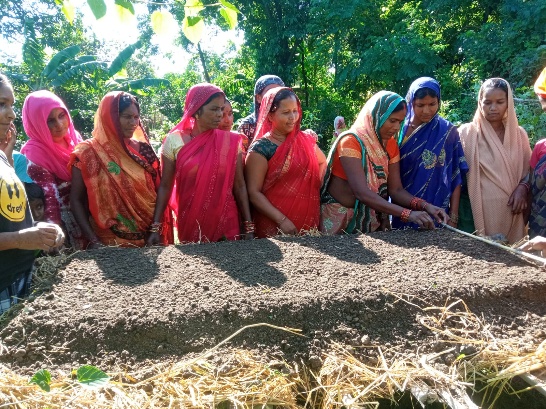
RRN undertakes various activities regarding awareness-raising and empowerment of deprived and marginalised communities, organizing and mobilizing them to claim their rights and campaign against prevailing socio-cultural malpractices.The EU funded Girl-SAMVAD P..
All development programs in RRN center around the four-fold approach of Rural Reconstruction, serving as the fundamental framework that underpins its initiatives and operations.
To prevent diseases and promote rights to health
To combat illiteracy, ignorance and provide exposure to the outside world
To fight poverty and hunger
To promote self-reliance and overcome civic inertia through institutional development
Location: Melamchi Headwaters, Indrawati Hills, Bagmati River Corridor, and Koshi Floodplain
Project Status:Phased Out
Location: Barekot rural municipality Jajarkot and Aathbiskot municipality, West Rukum district
Project Status:Ongoing
Location: Mai Jogmai Rural Municipality, Ilam
Project Status:Phased Out
Location: Buddhanilkhantha Municipality 2,3,& 5 and Shankarapur Municipality 4,8
Project Status:Ongoing
Location: Aasthbiskot (Rukum West), Nalgad (Jajarkot)
Project Status:Phased Out
Location: The programme covers 18 districts: Sunsari, Saptari, Siraha, Dhanusa, Mahotari, Sarlahi, Rautahat, Bara and Parsa of Eastern and Central region and Bajhang, Bajura, Achham, Jajarkot, Kalikot, Jumla, Dolpa, Mugu and Humla of Far and Mid- Western region (10 VDCs of each of the hill/mountain districts and 15 VDCs of each of the Terai districts)
Project Status:Phased Out